




Ultrasonic Inspection of Composites
The growing use of glass and carbon fiber composites in aerospace manufacturing increases the demand for reliable, cost-effective ultrasonic NDT systems. Complex, multilayered parts with curves, varying thickness, and features like stringers, flanges, radii, chamfers, holes, and untrimmed edges require 100% inspection coverage.
ScanMaster Systems offers a range of C-scan scanners, including traveling bridge and dual-tower systems (Vertical Ultrasonic Gantry and Horizontal Ultrasonic Gantry), as well as flatbed scanners. All modules are designed and delivered by a single supplier, ensuring seamless integration and streamlined support.
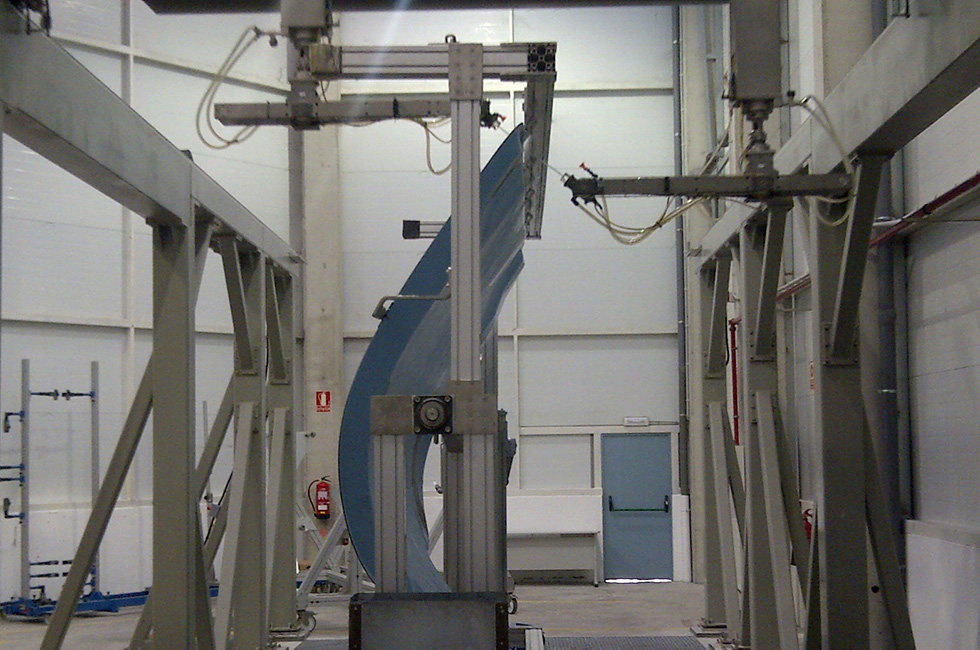
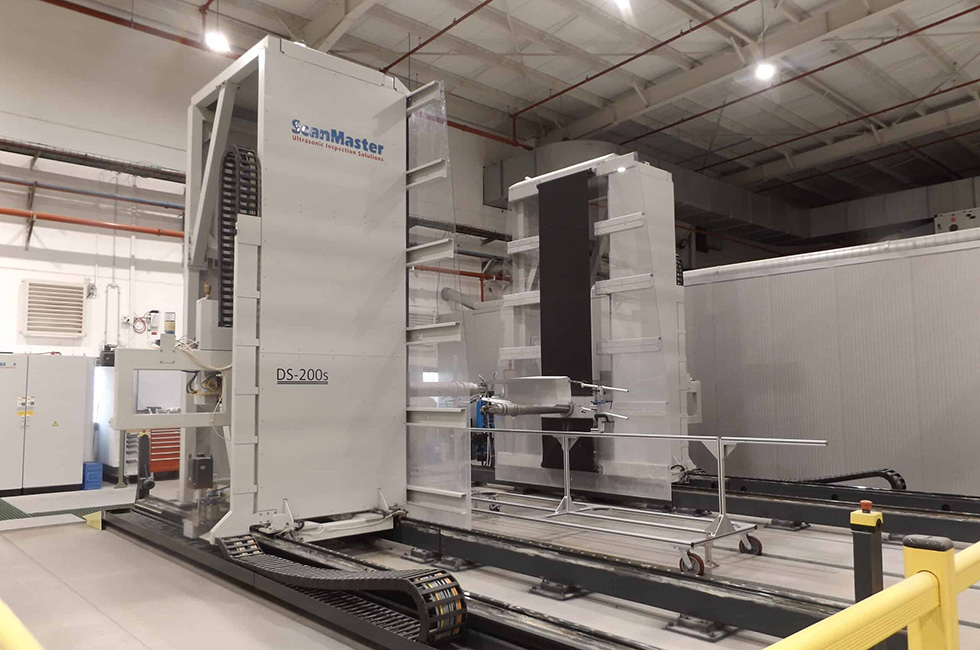
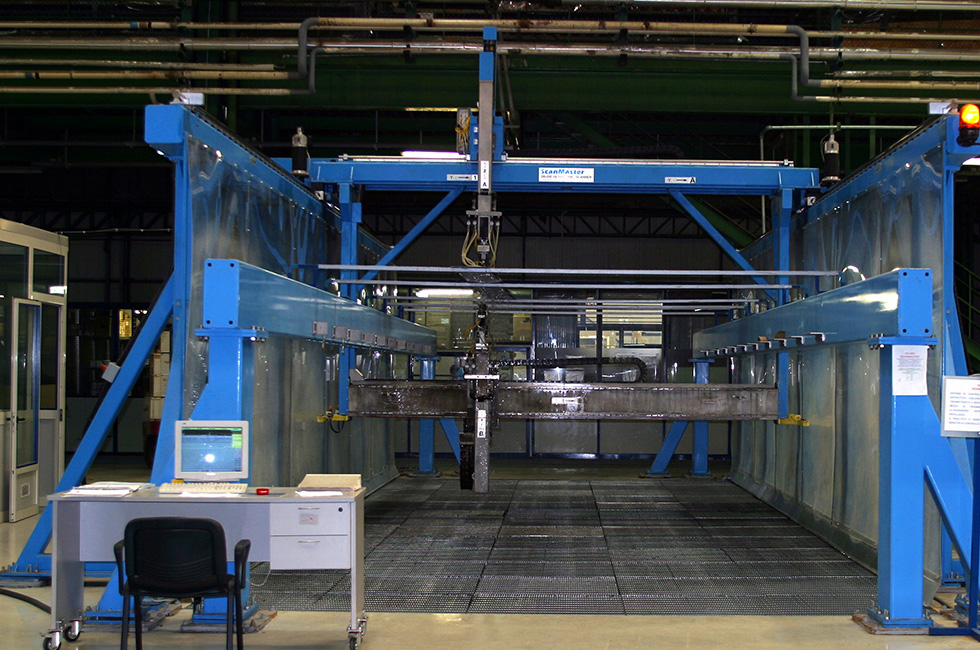
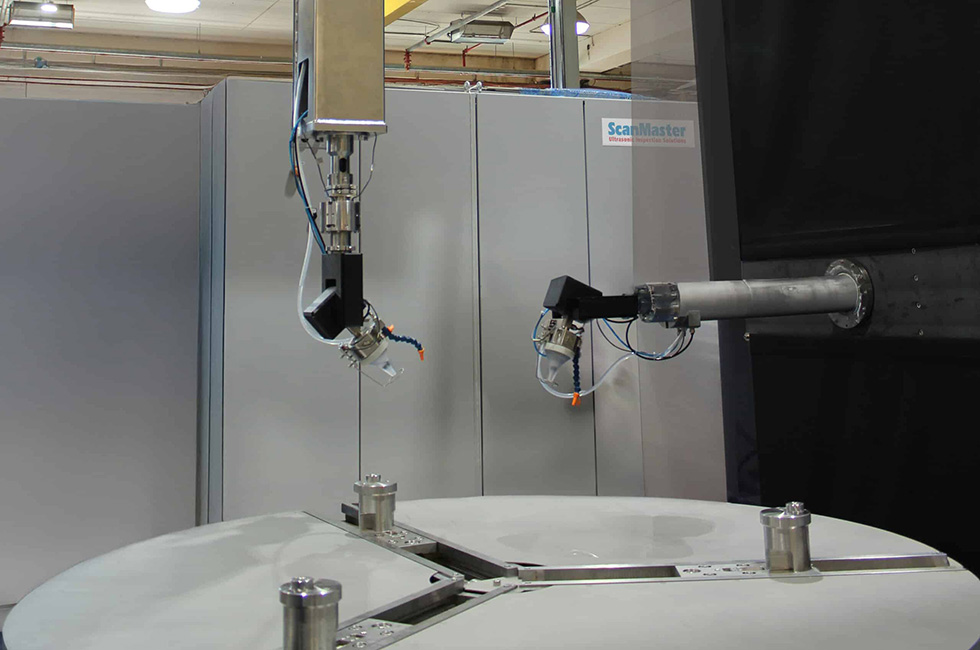
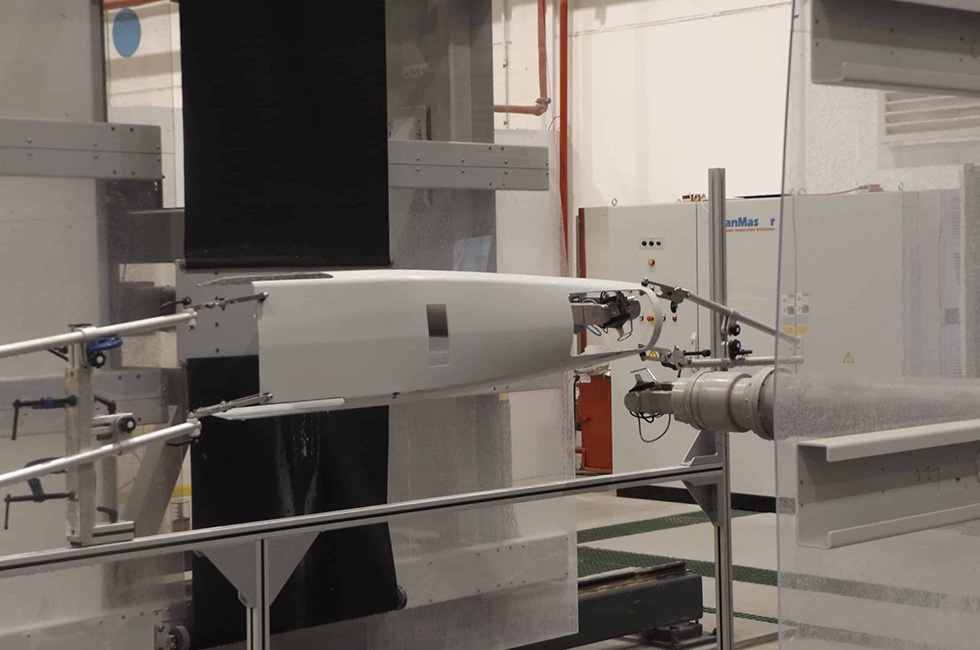
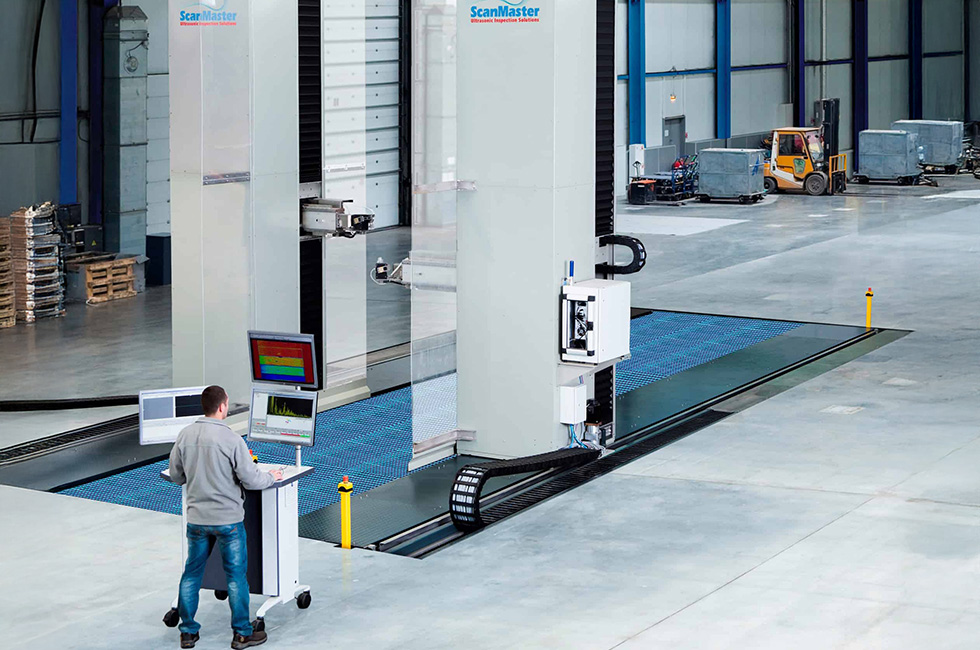
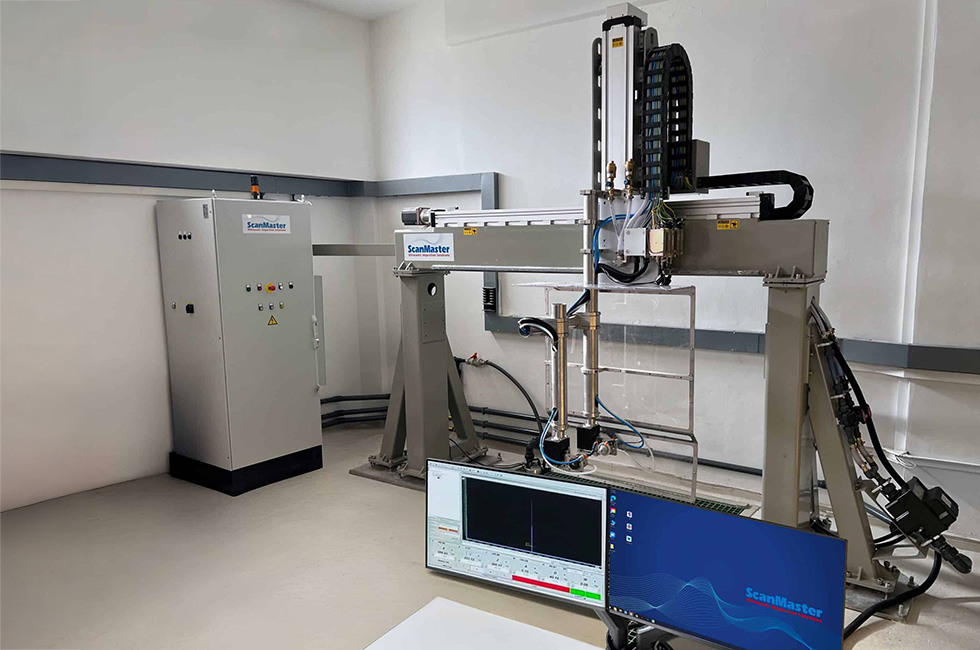
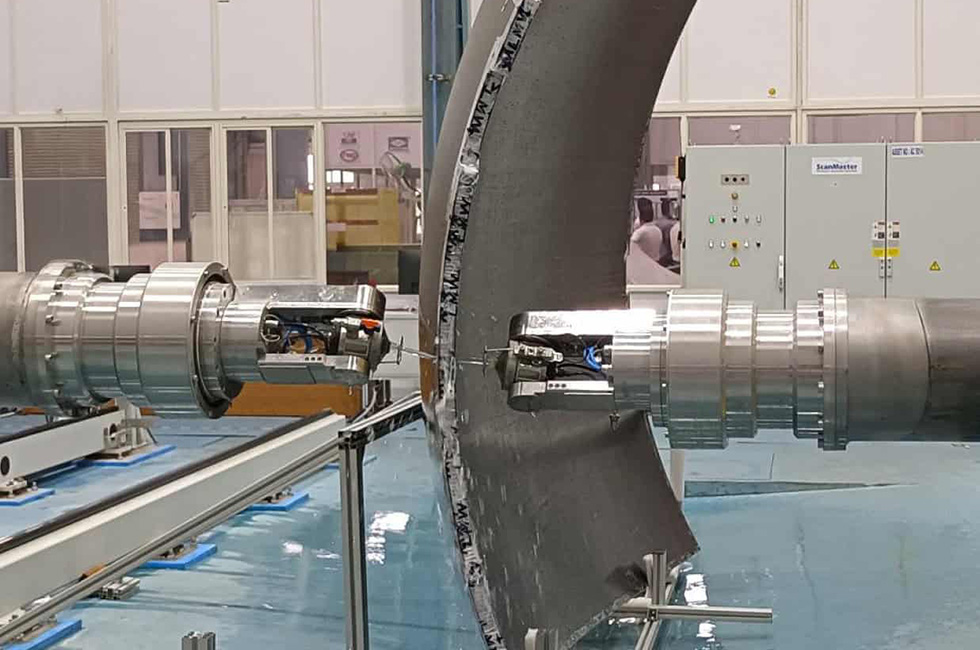
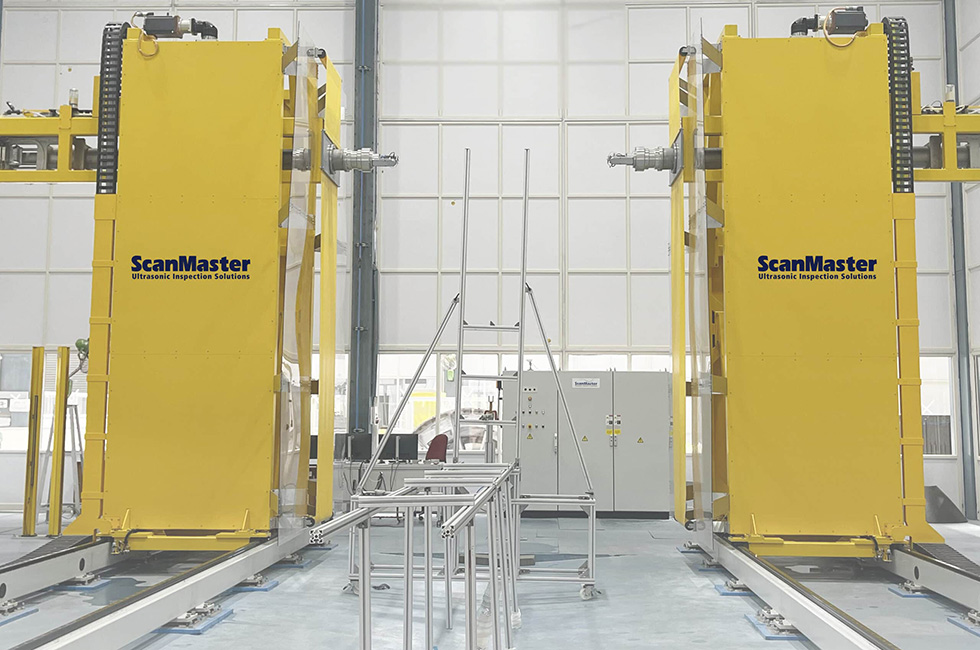
Supported Scanner Configurations
Traveling bridge type scanners (Vertical Ultrasonic Gantry)
Dual tower scanners
(Horizontal Ultrasonic Gantry)
Flatbed systems
Features and Benefits
- Fully integrated systems: All system components are designed, manufactured and tested by ScanMaster, ensuring smooth, reliable operation of the system as a whole
- Scanning speeds of up to 1,000 mm/second
- Simultaneous inspection in through transmission and pulse echo modes
- Simultaneous inspection with linear and logarithmic amplifiers
- Dual squirter, dual frequency features for high throughput
- Easy part programming through intuitive Teach In tools, including import of CAD files such as CATIA
- Advanced image analysis and processing tools
- Adherence to Airbus and Boeing requirements
- Packaged water systems with active flaw control, including storage, filtration and UV treatment
- Optional turntable and part fixtures
- Optional removable immersion tank (gantry and dual tower configurations)
LS-200 COPA
Phased Array Immersion Scanner for Automatic Ultrasonic Inspection of Composite Panels, Skins and Stringer Components
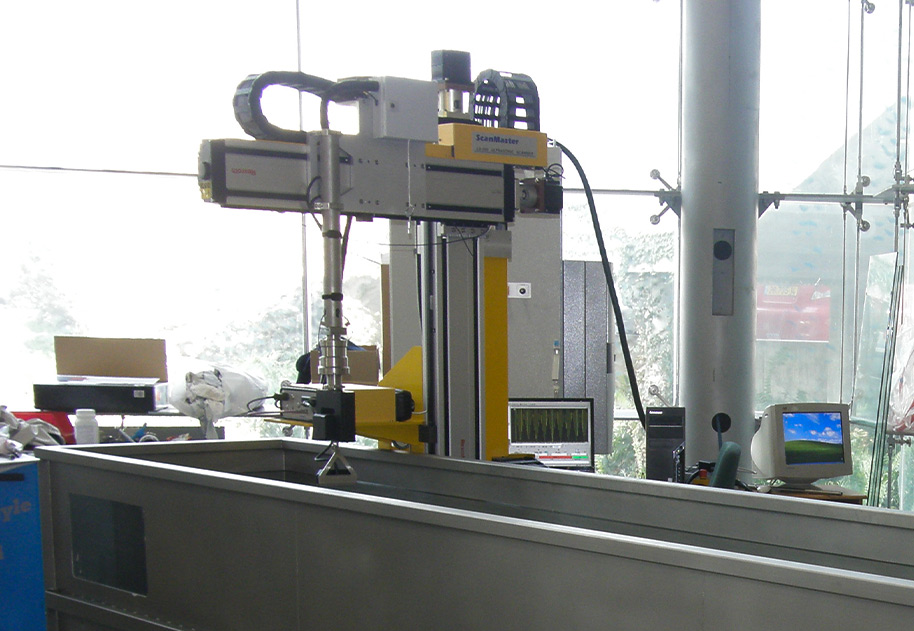
The LS-500 series industrial scanners are C-scan inspection systems whose modular design enables a range of system dimensions according to scanning requirements, with no need for customized designs. The rugged modular design of the bridge-mounted search tube ensures high-speed inspection with tight tolerance limits for accuracy, repeatability and resolution.
The LS-500 series also support ultrasonic phased-array testing.
The standard LS-500-1000 configuration consists of a motion envelope of 1,000 x 600 x 700mm (40″ x 24″x 28″) with part turntables up to 600mm (24″) in diameter.
The LS-500 configuration can also be utilized for ultrasonic testing solutions for bars and billets.
ScanMaster offer’s the LS-200 PA, a fully integrated phased array and conventional UT based immersion scanner for inspection of engine disks. The LS-200 PA system significantly increases inspection productivity while maintaining highest detection and evaluation capabilities.
What is water jet ultrasonic inspection?
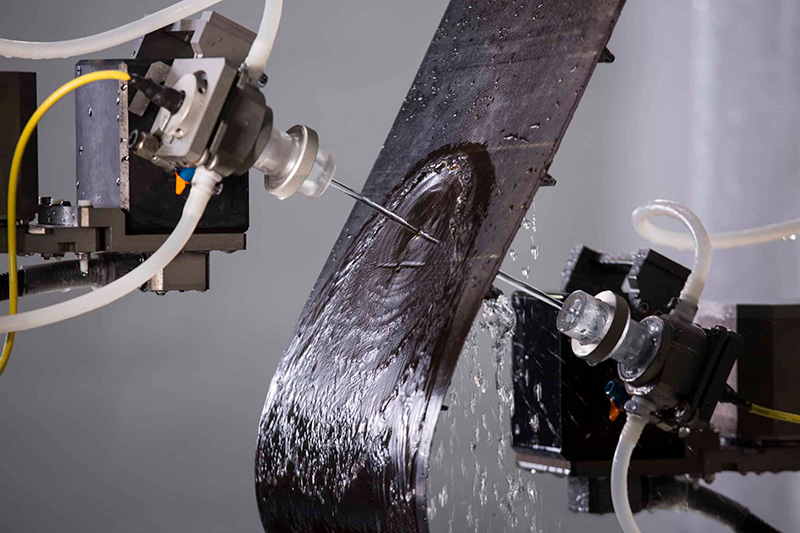
Water jet (squirters) ultrasonic inspection is a cutting-edge technique utilized for the meticulous examination of composite materials. Particularly suitable for dense materials and those with significant sound dissipation properties, such as glass fiber composites, this method has become the industry standard for inspecting such composites.
By employing water jets coupled with ultrasonic waves, this non-destructive testing approach allows for thorough through-transmission inspection. It is highly effective in detecting internal defects, delaminations, and anomalies that may compromise the structural integrity of composite materials. Whether it’s examining buoyant composites or components vulnerable to water ingress, water jet ultrasonic inspection provides unparalleled accuracy and reliability, ensuring the highest quality and safety standards in various industries, mainly for aerospace manufacturing.
Ultrasonic squirter-based inspection systems can be configured in various scanner types to suit different part geometries and inspection requirements. A vertical ultrasonic gantry (also known as a traveling-bridge scanner) is well-suited for inspecting single-curvature or moderately curved components and can be combined with rotary tables or immersion tanks for added versatility.
A horizontal ultrasonic gantry, often referred to as a dual-tower scanner, is ideal for double-curvature or complex-shaped parts. For flat or gently contoured components, flatbed scanners offer efficient high-throughput inspection by using multiple squirters operating in parallel, making them ideal for large-scale production settings.