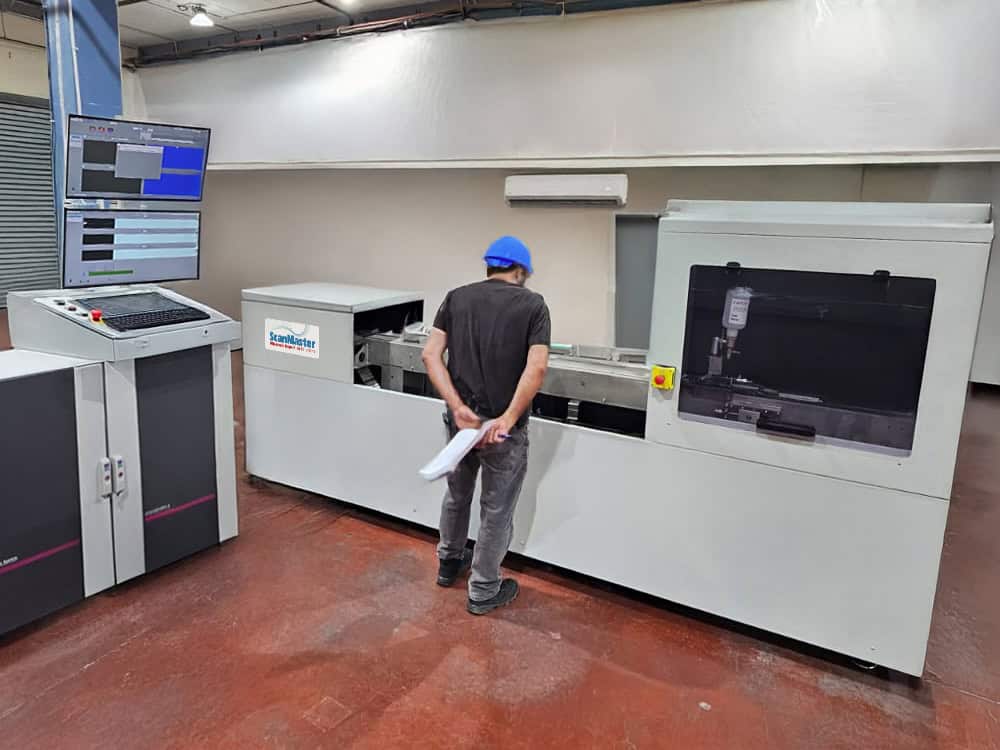
As electric vehicles (EVs) rapidly evolve, ensuring the reliability of their battery cooling systems is becoming increasingly important. A critical part of these systems is the brazed plate heat exchanger (BPHE), designed to withstand high pressure while preventing leaks or fluid cross-contamination. To guarantee these standards, ultrasonic inspection for EV heat exchanger components is a leading method in non-destructive testing (NDT).
Unlike visual inspections or helium leak testing, ultrasonic inspection allows for accurate internal evaluation of brazed joints—without damaging the part. It detects microscopic defects such as incomplete bonding, voids, or delaminations that are invisible to the naked eye. These issues, if left unchecked, can cause long-term failure in EV battery systems.
BPHEs, often made from thin stainless steel plates and brazed with copper or nickel, demand flawless internal bonding. Even minor flaws can compromise the cooling system’s efficiency. That’s why ultrasonic inspection of EV heat exchanger systems has become essential for manufacturers aiming for top-tier safety and performance. This method ensures bond consistency, structural integrity, and quality control during high-volume production.
We’re excited to announce that our latest innovation—a fully automated ultrasonic inspection scanner—is in the final stages of approval. It’s undergoing calibration and rigorous static and dynamic testing at our production site before being delivered to a major EV manufacturer. Our team of mechanical, software, and control engineers is collaborating closely to guarantee precision and reliability in demanding industrial environments.
👉 Check out the full story on our LinkedIn post to see the system in action.
👉 For more information about our ultrasonic inspection solutions, click here.